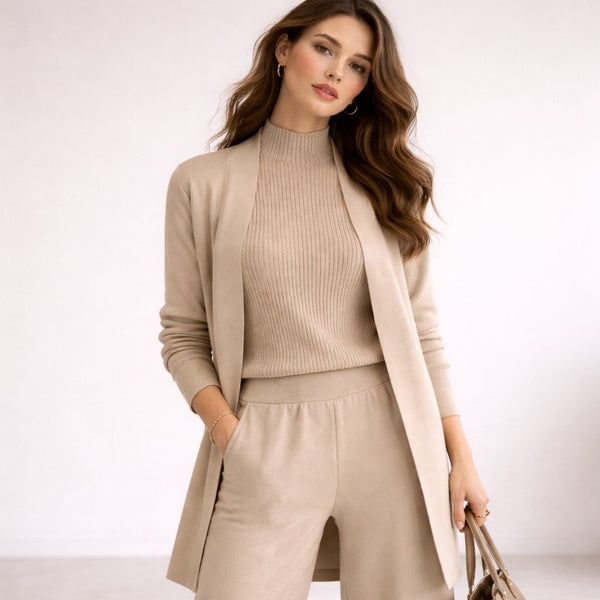


The Blazer Fit Checklist
A blazer is the most unforgiving thing in a wardrobe because its structure shows every millimetre of mismatch. It is also the piece most worth getting right, because a blazer that fits is worn constantly and one that does not is never worn at all. Tailors check five points in a fixed order. Doing the same before you order avoids most returns.
One: the shoulder
The seam sits exactly on the end of your shoulder bone, with the sleeve hanging straight from it. Overhang or a dimple below the seam means the shoulder is too wide; a pull across the back means too narrow. Nothing else matters until this is right, because it is the one point that cannot be altered.
Two: the button
Fastened, the front should lie flat with no X-shaped pull at the button and a gap you can slide a flat hand into. Strain here means the chest is too small; a wide gap means too large.
Three: the sleeve
With arms at your sides, the sleeve ends at the wrist bone and shows a little shirt cuff. This is the easiest alteration, so a sleeve slightly long is no reason to reject an otherwise good fit.
Four: the length
The hem should cover the seat and end where your fingers curl with arms relaxed. Longer reads dated; shorter reads cropped by design, which is a look rather than a fault, but should be chosen on purpose.
Five: the collar
The collar should sit flat against your shirt collar all the way round. A gap at the back of the neck means the blazer is standing off the body and will never sit right, however good the rest is.
Fabric changes the verdict
A wool blazer with a little stretch forgives a few millimetres; a crisp cotton or linen one does not. Check the fibre line on the product page and be stricter with the stiffer cloth.
Lined or unlined
A fully lined blazer holds its shape better and slides over knitwear without catching, at the cost of a little warmth in summer. A half-lined or unlined one is lighter and cooler but shows every seam and creases faster. For a blazer that will be worn from autumn to spring over a sweater, full lining is the practical choice; for one that works in an office all year, half-lined keeps it wearable in warmer months.
Before you order
Every blazer here lists chest, shoulder and sleeve measurements. Compare them against a blazer you already own and like, rather than against your body, since the garment measurement already includes the room it needs. If two sizes are close, send both numbers through the Contact Us page and we will tell you which. Our Return and Refund Policy gives 30 days if it is not right, and the FAQ covers the rest.